Showing posts with label photo. Show all posts

Thursday, December 2, 2010

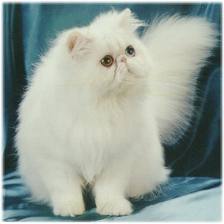
Persian Cats Exotic Shorthair


Persian Cats Exotic Shorthair

The Exotic Shorthair Persian similar in temperament and type, with the exception of a short coat, solid.
Persian is used as an outcross in secret by a few American Shorthair (ASH) breeders in the late 1950s to "improve" their breed. Views hybrid gained recognition in the show ring but other farmers are not happy with the changes successfully pushed for a new generation of standards that would disqualify ASH who showed signs of hybridization.
One ASH ranchers who see the potential of the Persian / ASH traffic is proposed and finally managed to get the CFA to recognize them as new species in 1966, with the name of the Exotic Shorthair. Regular outcrossing to Persians have made the present-day Persian Exotic Shorthair similar in every way, including temperament and conformation, with the exception of a short dense coat. He even has inherited a lot of health problems Persia. The more easy to manage coat has made some people label Exotic Shorthair Persian lazy.
Because regular use of Persians as outcrosses, some Exotics may carry a recessive gene copies of classical music fans. When two such cats mate, there is one in four chance that each child with long hair. Ironically, Exotics with long hair are not considered Persian by the CFA, although The International Cat Association accepted them as Persians. other associations to register them as a separate breed longhair Exotic.


Himalayan Cats


Himalaya
Fans of classical music or Colorpoint Himalayas created by crossing Persians with Siamese. This intersection also introduced brown and purple color to the solid-colored Persians.

In 1950, Siam was crossed with Persians to make a breed with the Persian body type but colorpoint pattern of Siam. It was named the Himalayas, after other animals such as rabbits colorpoint Himalayas. In England the breed was recognized as Colorpoint longhair. Himalayan stand as a separate breed in the United States until 1984, when the CFA joined the Persians, to appeal the board of the second type of offspring. Some Persian breeders are not happy with the introduction of this "hybrid" to "pure" their line of Persian.

CFA Himalayans registration set by the breeder will be able to see a descendant of the Himalayan Persian with the mere sight of pedigree registration number. This is to make it easier for farmers who do not want blood Himalayas in their breeding lines to avoid individuals who, while not necessarily indicate a pattern colorpoint, can carry the gene recessively point color. Himalayan Persian by descent have registration numbers beginning with 3 and is usually referred to by breeders as carriers colorpoint (CPC) or 3000-series cat, although not all will actually carry the recessive gene. Siam is also a source for the brown and purple in the Persian solid.

Tuesday, November 30, 2010

PERSIA and ANGGORA


Persian cats are presented in the first event in Crystal Palace, London in 1871. As the specimens closer to the conformation of Persia became more popular types, efforts were made to distinguish it from Angora. The first breed standard (later known as the point of superiority) was published in 1889 by Harrison Weir, the creater showed the first cat. He stated that the Persian is different from Angora in the tail which is longer, fuller hair and rough at the tip and larger head, with less pointy ears. Not all cat breeders agree with the distinction of two types and in the 1903 book "Book Cat" Francis Simpson stated that "the difference, apparently with almost no difference, between Angoras and Persians was of so delicate nature that I should be pardoned if I ignore the ordinary class called the Angora cat. "
Bevill Dorothy Champion describes the differences between the two types of Everybody's Books 1909 Cat:

    
Our pedigree imported long hair-day no doubt cross from Angora and Persian, the second has a round head of the mantle, the former also is quite different qualities. The coat of the Persian consists of wool under a long outer coat and woolly coat. In the summer it lost all underwool thick, and only long hair remains. Also slightly shorter hair on the shoulder and upper back leg.

    
Now, the Angora has a coat that is very different, consisting of long, soft hair, depending on the keys, leaned into little curls or waves in the lower body. Long hair is also much on the shoulders and hind legs of Persia, is a big improvement, but failed Angora Persian in the head, the first having more wedge-shaped head, whereas that of the modern Persian superior roundness.

    
Of course. Angoras and Persians were constantly crossed, with an increase each decide to breed, but the long-haired cat is more obvious today grew from the Persian-Angora.
Champion deplores the lack of distinction between types of long-haired variety by the breeder of English, who in 1887, decided to group them under the umbrella term "long-haired cat."


 Anggora pictures


Persian Pictures 


Persian Cat Medium

This image is a cat type of medium peersia.


Persian Cats


Is a long-haired Persian cat is marked with a round face and short muzzle. Its name refers to the Persian, Iran's former name, in which the same cat was found. Recognized by the cat fancy since the late 19th century, was developed first by the British, and especially by American farmers after the Second World War. In Britain, it is called an artist or a Persian classical musician.
Captive breeding selectively performed by breeders has allowed the development of a variety of coat colors, but also lead to the creation of the flat-faced Persian. Preferred by farmers; this head structure can bring with it a number of health problems. As with the type of Siam, there are efforts by some breeders to preserve the old type of cat with a snout more prominent, which is more popular with the general public. Polycystic kidney disease is prevalent in the breed offspring, affecting nearly half the population in some countries.
Calm and simple nature of the Persian confer the propensity for apartment living. It has been the most popular type in the United States for many years but its popularity has seen a decrease in the UK and France.

Himalayah Funny Cats pictures

This image is a Norwegia cat pictures are very funny


Norwegia Funny Cats pictures

This image is a Norwegia cat pictures are very funny

funny Anggora cats pictures

This image is a Anggora cat pictures are very funny


Funny Cats of Persia pictures

This image is a Persian cat pictures are very funny


Funny Hamster picture

indeed very made grimly funny look at the behavior they are not?


Roborovskis Hamster

Roborovskis (Phodopus roborovskii) or desert hamster is the smallest of all hamsters, an average of under one inch at birth, and (rarely) three inches long as adults. Distinguishing characteristics of Roborovskis is eyebrow-like, white spots, and absence of back line (there are other members of the genus Phodopus). The average lifespan for hamsters Roborovski is three (3) years, although this depends on living conditions (extreme that four years in captivity and two in the wild). Another "unique" features of "Robo" is that they are hypoallergenic, unlike many of their brethren larger


Syirian Golden Hamster

Syrian golden hamsters or hamster, Mesocricetus auratus, is a very popular member of the subfamily Cricetinae rodents, hamsters. In the wild they are now considered vulnerable. Their numbers have been declining due to habitat loss (caused by agriculture) and the deliberate destruction by humans [1] However,. they are popular as pets and animals in scientific studies. Adults grow 5-7 inches (13 to 18 cm) in length, and typically will have 2 to 3 years, but can live to 5 years. Dull golden hamster is an animal. They tend to wake up after sunset, late at night and at dawn, causing some people mistakenly described them as night.


Panda Hamster

Panda Hamster is the hamster type of Campbell who has black and white. Very funny to see because a glance is similar to beef (such as cattle that are black and white). Hamsters are very shy.


Hamster Funny

This image is a behavior that is very cute hamsters, so that makes us passionately, laugh therefore


Campbell Hamster


 Campbell's dwarf hamster (Phodopus campbelli) is a species of hamster. Hamsters are found by W.C. Campbell in 1902 in Tuva, an area that is geographically and history connect with China and Russia. Hamsters are also living in Central Asia, Altay mountains, and Heilungkiang and Hebei province in northeast China.